Podcast: Play in new window | Download (Duration: 19:13 — 26.4MB)
Subscribe: RSS
Summary
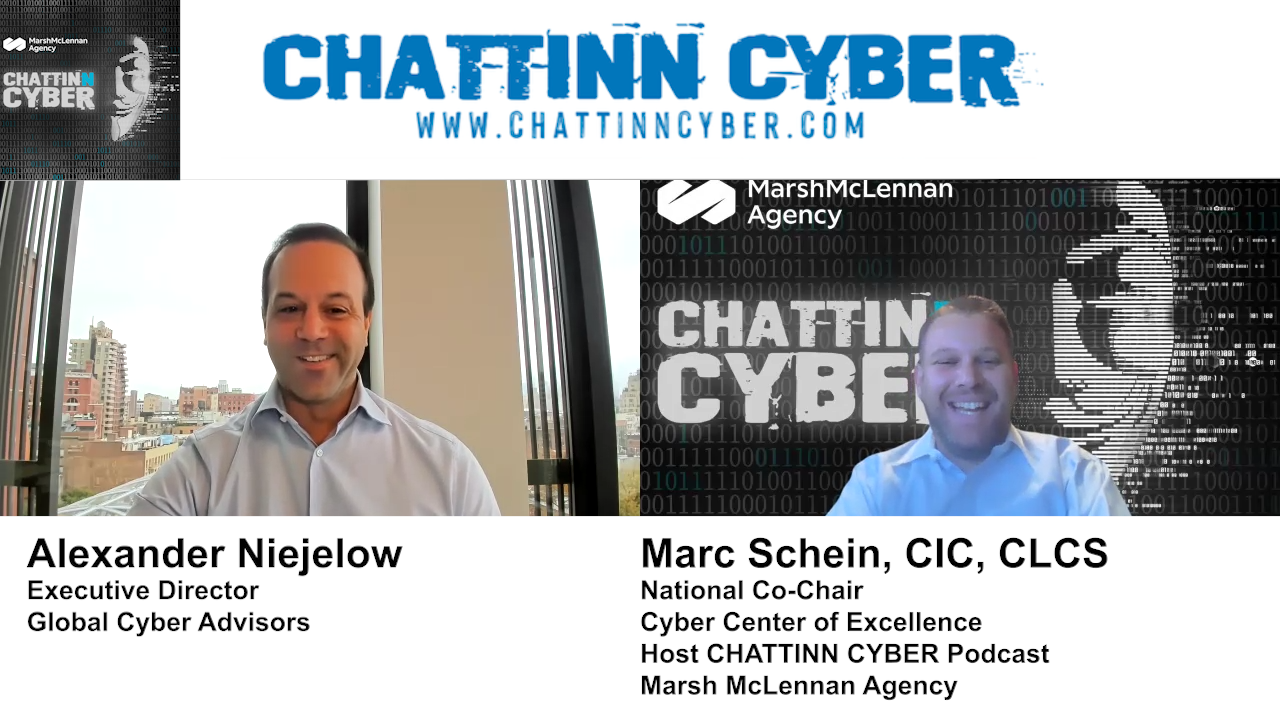
Today Marc is chattin’ with Alex Niejelow, a respected figure in cybersecurity. The episode opens with Marc highlighting Alex’s unique background growing up in Philly and his diverse career path. Alex shares how his early career as a Durham police officer and later as a lawyer shaped his mindset around public service and supporting people and businesses. He then transitioned into federal and state government roles, including significant positions in the Obama administration and Homeland Security, focusing on trade, customs, and national security issues such as counterfeit semiconductors in supply chains.
They then chat about Alex’s role on the National Security Council, where he worked on the intersection of trade and cybersecurity, a concept that was not widely recognized in the early 2010s but has since become central to government policy. Alex explains his involvement in developing the first-ever cyber sanctions regime, a tool designed to economically disincentivize cybercriminals and nation-states from monetizing stolen intellectual property and trade secrets. This approach was innovative in addressing the asymmetry in cyber threats, where traditional law enforcement and diplomatic tools were insufficient.
The chat then shifts to the challenges Alex faced working across multiple government agencies with differing priorities, which, while complex, ultimately led to better outcomes through collaboration and creative problem-solving. Alex emphasizes the importance of reducing asymmetry in cybersecurity, noting that companies remain vulnerable at their weakest points. He highlights the evolution of the cyber insurance industry, which has become more sophisticated with risk engineers engaging deeply with clients to improve cybersecurity postures and insurance terms.
Alex explains his motivation for founding Hilco Global Cyber Advisors, driven by the need to support middle-market companies that often lack adequate cybersecurity resources despite their sophistication and capital. He critiques the cybersecurity industry’s tendency to self-silo and stresses the importance of aligning cybersecurity solutions with the nature of the products and services businesses provide to increase adoption and effectiveness.
Finally, the chat turns to artificial intelligence (AI) as a major cybersecurity topic in 2025. Alex acknowledges both the threats and opportunities AI presents, noting that threat actors are leveraging AI to scale traditional cyberattacks like phishing. He expresses optimism about the cybersecurity community’s commitment to addressing these challenges and highlights regulatory efforts, such as guidance issued to the insurance industry on AI use in underwriting, to mitigate risks including bias. The episode closes with Alex sharing a personal anecdote from his time at the White House and providing contact information for Hilco Global Cyber Advisors.
Key Points
- Alex’s career journey from police officer to cybersecurity expert in public and private sectors
- Development of the first-ever cyber sanctions regime to economically deter cybercrime
- The importance of collaboration across government agencies to address complex cyber challenges
- The evolution and sophistication of the cyber insurance industry in reducing asymmetry
- The dual impact of AI on cybersecurity: expanding threats and fostering innovative defenses.
Key Quotes
- “The idea that cybersecurity issues and economic issues were actually interconnected was not widely accepted [in 2010]. It was still emerging. Fast forward to today. It is abundantly clear the intersectionality of those issues.”
- “Companies are always as weak as their weakest link.”
- “If you let the nature of the products and services that are being provided better inform and drive the cybersecurity solutions instead of vice versa, I think there will be a greater adoption.”
- “Threat actors are expanding their capacity and capabilities leveraging AI … but it is the speed and scale at which it is becoming exacerbated that I think is most concerning.”
About Our Guest
Alexander Niejelow is Executive Director of Global Cyber Advisors at Hilco Global, bringing deep expertise in cybersecurity, fintech, and digital policy from leadership roles in both the private sector and government. He previously served as Deputy Superintendent for Innovation Policy at the New York Department of Financial Services, leading initiatives on AI and emerging fintech. At Mastercard, he was Senior Vice President for Cybersecurity Coordination and Advocacy, overseeing global cybersecurity and technology policy efforts. Alex also held key government positions, including Director of Cybersecurity Policy at the White House National Security Council and Chief of Staff to the U.S. Intellectual Property Enforcement Coordinator. He began his career as a litigator and holds a JD from the University of Pennsylvania and a BA from Duke University. Alex actively contributes to cybersecurity policy through board roles with the Center for Cybersecurity Policy and Blue Star Families, and has led global coalitions focused on cyber risk reduction and digital protection.
Follow Our Guest
About Our Host
National co-chair of the Cyber Center for Excellence, Marc Schein, CIC,CLCS is also a Risk Management Consultant at Marsh McLennan Agency. He assists clients by customizing comprehensive commercial insurance programs that minimize the burden of financial loss through cost effective transfer of risk. By conducting a Total Cost of Risk (TCoR) assessment, he can determine any gaps in coverage. As part of an effective risk management insurance team, Marc collaborates with senior risk consultants, certified insurance counselors, and expert underwriters to examine the adequacy of existing client programs and develop customized solutions to transfer risk, improve coverage and minimize premiums.
Follow Our Host