Podcast: Play in new window | Download (Duration: 12:09 — 16.7MB)
Subscribe: RSS
Summary
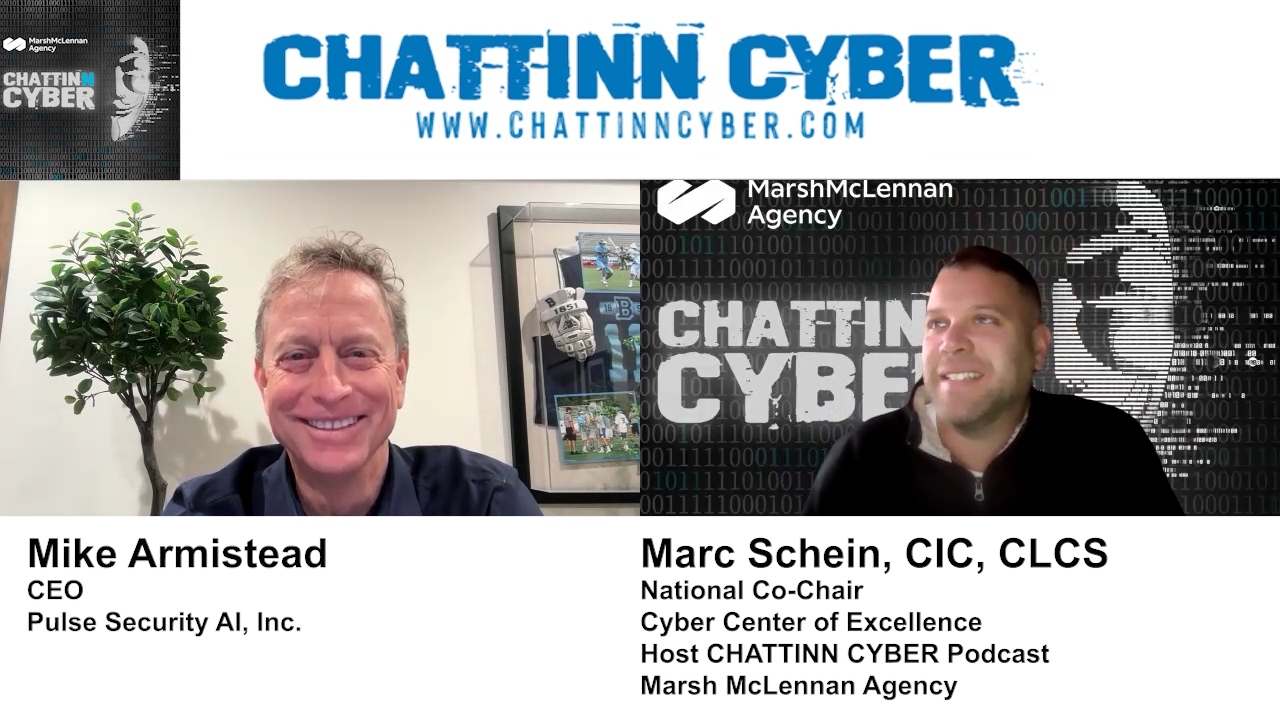
In this episode of Chattinn Cyber, Marc Schein is chattin’ with Mike Armistead, a seasoned cybersecurity expert with over 40 years of experience, including more than 20 years as a vendor in the cybersecurity space. The conversation opens with a discussion about the challenges security leaders face in 2026. Mike highlights the complexity of their role, comparing it to that of a CFO managing financial risk, but notes that cybersecurity leaders often lack the comprehensive management tools that CFOs have. He emphasizes the fragmented nature of cybersecurity tools and the difficulty in stitching together disparate signals to form a coherent security posture.
Mike further explains that the human element is the critical glue in cybersecurity programs. The effectiveness of security teams depends heavily on the leadership and the ability of individuals to contextualize technical signals within the business environment. This need for situational awareness is driving interest in AI technologies, particularly on the defender side, to augment human capabilities and expand the scope and depth of security operations.
The chat then shifts to the role of AI in cybersecurity products. Mike observes that while AI is increasingly integrated into detection tools, the industry has largely shifted focus away from prevention. He advocates for a strategic return to prevention, where AI can play a significant role in helping security leaders develop and implement risk mitigation strategies tailored to their organizations. Mike stresses the importance of a holistic approach that goes beyond real-time detection to include employee training, access control, and disaster recovery.
Addressing the challenges faced by middle-market organizations, Mike points out that these companies are often expected to meet the same cybersecurity standards as large enterprises but with far fewer resources. He advises middle-market CISOs to prioritize protecting their most critical assets—their “crown jewels”—and to have candid conversations with leadership about realistic security goals. This pragmatic approach helps ensure that limited resources are focused on the highest risks rather than attempting to cover every possible threat.
Finally, Mike shares information about a community he helped start called the Security Impact Circle, which focuses on cybersecurity leadership issues such as board engagement. This community facilitates workshops that bring together CSOs and board directors to bridge the communication gap and align security priorities with business needs. Mike encourages listeners to visit securityimpactcircle.org to learn more and get involved.
Five Key Points Covered
- Cybersecurity leaders face complex challenges similar to CFOs but lack equivalent management tools.
- Human expertise is essential to contextualize technical security signals within the business environment.
- AI is increasingly used in detection but should also be leveraged to enhance prevention strategies.
- Middle-market organizations must prioritize protecting their most critical assets due to limited resources.
- The Security Impact Circle community helps improve communication and alignment between security leaders and boards.
Five Key Quotes from the Conversation
- “Security leaders have a tough job… it’s not unlike what a CFO has to think about, right? That risk happens to be financial, and the CISOs really happens to be in cyber.”
- “The security teams are really bound by how good not only their leader, but the deputies, the managers, the architects, those individual contributors that really help lead it.”
- “I think the opportunity is to swing it back to prevention… AI can really start to help on the prevention strategy side of cybersecurity.”
- “Middle-market leaders are expected to do everything that the largest enterprises do, but they don’t have the resources to cover all the ground.”
- “We bring in a director from a public company’s audit committee to run workshops… it’s less about what a CSO thinks they should say and more about what the director thinks they need to hear.”
About Our Guest
Mike Armistead brings nearly 40 years of business experience marked by a proven track record of building companies, navigating strategic acquisitions, and leading growth at every stage. As co-founder and CEO of Respond Software, acquired by Mandiant for $200 million, and co-founder of Fortify Software, acquired by HP for $285 million, Mike has played pivotal roles in multiple successful startups, including serving as SVP on the turnaround team at WhoWhere (acquired by Lycos for $133 million) and contributing to Pure Software’s IPO. His post-acquisition leadership includes key roles as VP of Products & UX at Mandiant, Director at Google Cloud, and VP & GM for Fortify and ArcSight business groups at HPE, where he drove significant expansion and over $400 million in revenue impact. Alongside these successes, Mike gained valuable insights from two brief ventures, including leading InLeague through post-9/11 financial challenges and emphasizing product-market fit in another startup. Beginning his career as a Product Manager at HP in the late 1980s, Mike’s multifaceted experience spans diverse industries and company sizes. Today, he remains passionate about building high-performing teams and tackling complex, noble challenges.
Follow Our Guest
About Our Host
National co-chair of the Cyber Center for Excellence, Marc Schein, CIC,CLCS is also a Risk Management Consultant at Marsh McLennan Agency. He assists clients by customizing comprehensive commercial insurance programs that minimize the burden of financial loss through cost effective transfer of risk. By conducting a Total Cost of Risk (TCoR) assessment, he can determine any gaps in coverage. As part of an effective risk management insurance team, Marc collaborates with senior risk consultants, certified insurance counselors, and expert underwriters to examine the adequacy of existing client programs and develop customized solutions to transfer risk, improve coverage and minimize premiums.
Follow Our Host