Podcast: Play in new window | Download (Duration: 11:50 — 16.3MB)
Subscribe: RSS
Summary
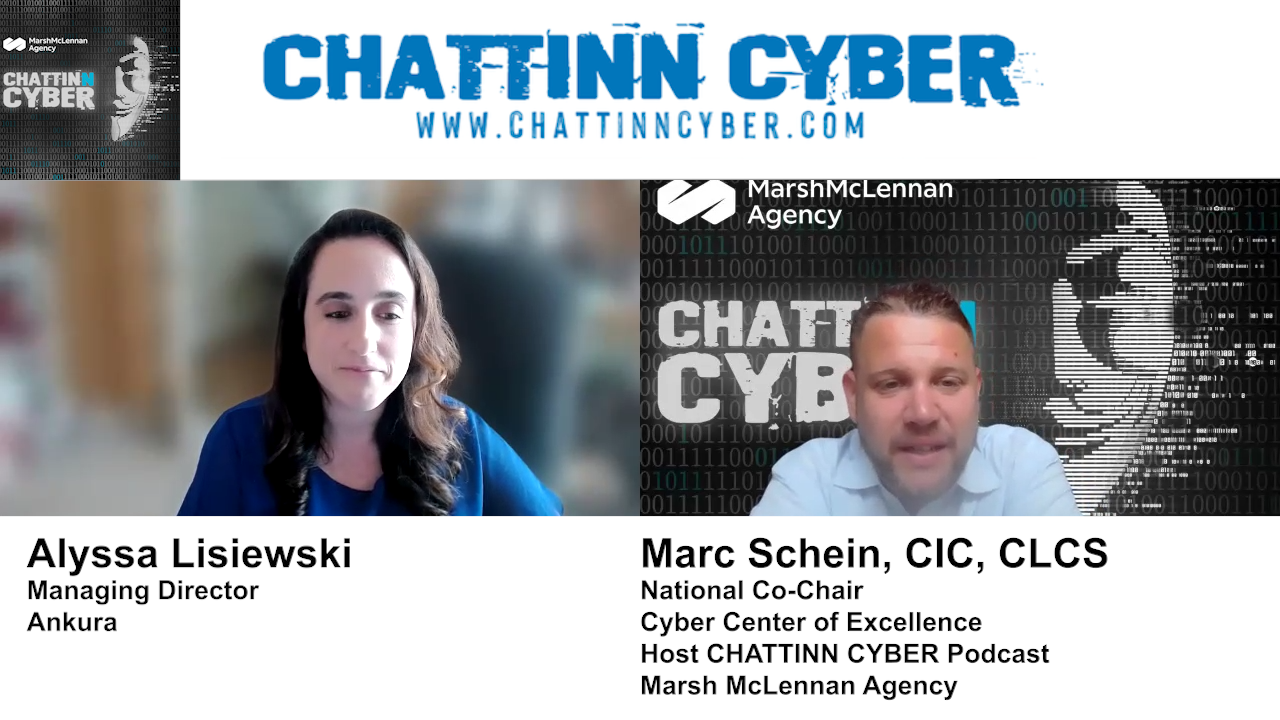
In this episode of Chattinn Cyber, Marc is chattin’ with Alyssa Lisiewski, Managing Director at Ankura and one of the best known and respected cybersecurity experts in the country. The conversation begins with Alyssa sharing her early introduction to technology, influenced by her father who taught her to take apart and reassemble computers from a young age. Initially interested in forensic crime scene investigations, Alyssa shifted her focus to cybersecurity due to her father’s encouragement and foresight about the field’s growth. She started her career as an intern in diplomatic security’s computer investigations and forensics unit, then pursued a master’s degree while working as a government contractor, honing her skills in cybersecurity and high-tech crime investigations.
Alyssa’s career progressed into the intelligence community, where she specialized in digital forensics from an intelligence perspective, which differed from traditional digital forensics. She later worked at the Department of Defense Cyber Crime Center in Maryland, conducting forensic examinations and testifying in court cases. Transitioning to the private sector, Alyssa led a digital forensics team at a major financial company focusing on insider threats before joining Anchor, where she combines her cyber threat and forensic expertise.
The discussion then shifts to clarifying common internet terminology: the surface web, deep web, and dark web. Alyssa explains that the surface web is the small portion of the internet most people use daily, such as Google and social media. The deep web contains more anonymous and legal content like academic and medical documents, while the dark web is accessed via Tor and is often associated with illicit activities but also hosts legitimate anonymous communications.
Alyssa emphasizes the importance of proactive dark web monitoring for businesses. Beyond just detecting if stolen data is posted, monitoring can reveal chatter among threat actors about industries or competitors, enabling companies to anticipate and mitigate attacks. She shares a real-life example where her team identified a threat actor group’s tactics early, allowing a client to detect an intrusion that had gone unnoticed for a month, demonstrating the value of threat intelligence in incident response.
Finally, Marc and Alyssa chat about the benefits and challenges of incorporating dark web analysis into post-incident investigations. While it can clarify the true impact of a breach and assist in legal mediation, there are limitations due to the trustworthiness of data posted by criminals. Her team validates findings through metadata analysis and breach research. The episode closes with Alyssa inviting listeners to connect with her via email or LinkedIn for further discussion, highlighting her openness to sharing knowledge and engaging with the cybersecurity community.
Key Points
- Alyssa’s Journey: Alyssa’s early exposure to technology and career path from forensic interests to cybersecurity and digital forensics.
- Web Infrastructure: Explanation of the surface web, deep web, and dark web, including their differences and common misconceptions.
- Threat Detection: The strategic value of proactive dark web monitoring for businesses to detect threats and industry chatter before breaches occur.
- A real-world example of how threat intelligence helped identify a threat actor’s tactics and detect a breach earlier than usual.
- The role of dark web analysis in post-incident investigations, including its benefits, limitations, and methods to validate data.
Key Quotes
- “When I was four, my dad taught me how to take apart a computer and put it back together… he made sure I was learning about it from a very young age.”
- “The surface web is really only 4 or 5% of the web. The majority of the web is the deep web and the dark web.”
- “If you’re not monitoring proactively the dark web, chances are the first time you’re looking at the dark web is after that breach.”
- “We knew … the threat actor group… and because of that, we were able to identify the actual true start of the incident, about a month prior to the update we were working on.”
- “There are going to be situations where we may not be able to identify if data is out there, or we may identify it but not give any context… that’s why we do other things to try to validate it.”
About Our Guest
Alyssa Lisiewski is a Managing Director at Ankura in Washington, DC, bringing over 14 years of specialized experience in digital forensics, cybersecurity, and insider threat investigations. She has a proven track record of leading and conducting complex cyber investigations that protect critical digital assets across diverse industries including government, financial services, and legal sectors. Alyssa is highly skilled in operating within digital forensic lab environments, adhering to industry standards for evidence handling, and analyzing electronically stored information. She has been qualified as an expert witness in federal and military courts and has played key roles in program leadership, strategic service development, and partner engagement, driving innovation and excellence in cyber risk management.
Follow Our Guest
About Our Host
National co-chair of the Cyber Center for Excellence, Marc Schein, CIC,CLCS is also a Risk Management Consultant at Marsh McLennan Agency. He assists clients by customizing comprehensive commercial insurance programs that minimize the burden of financial loss through cost effective transfer of risk. By conducting a Total Cost of Risk (TCoR) assessment, he can determine any gaps in coverage. As part of an effective risk management insurance team, Marc collaborates with senior risk consultants, certified insurance counselors, and expert underwriters to examine the adequacy of existing client programs and develop customized solutions to transfer risk, improve coverage and minimize premiums.
Follow Our Host